


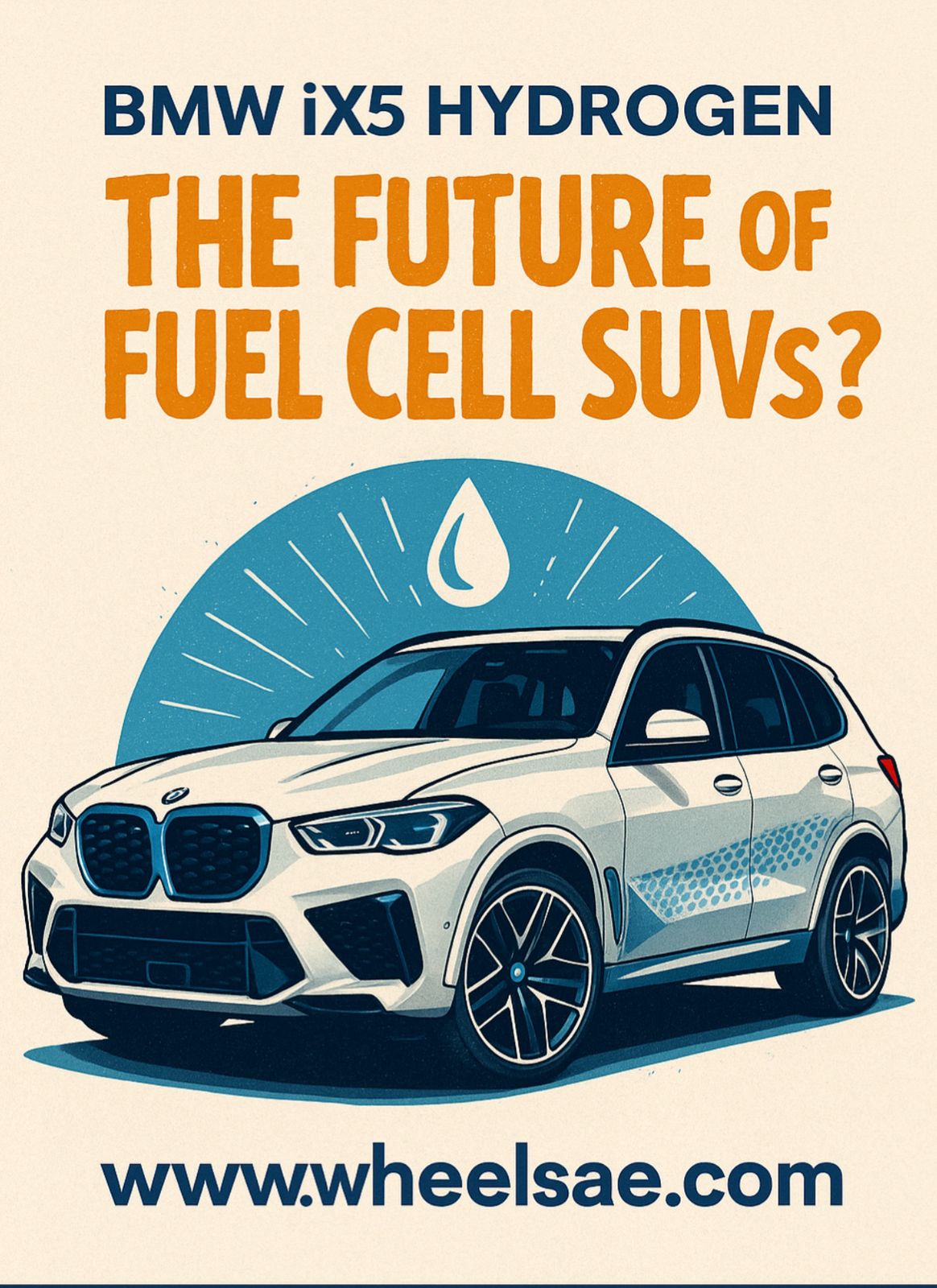
BMW iX5 Hydrogen – The Future of Fuel Cell SUVs?
1. How the Hydrogen Fuel Cell System Works
The BMW iX5 Hydrogen relies on a fuel cell system that converts hydrogen into electricity, powering electric motors without combustion. Key elements:
• It’s equipped with two hydrogen tanks holding a combined capacity of 6 kg of hydrogen. 
• The fuel cell stack delivers 125 kW (≈ 170 hp) as continuous power from hydrogen to electricity. 
• That electricity feeds into BMW’s electric drive unit (similar to their EV tech), combining the hydrogen-generated electric power with stored electric energy (battery) when needed. 
• The result: the car can run as a zero-emission vehicle, with water vapor as the only tailpipe emission.
Because hydrogen refueling is fast (minutes) and energy density is high, the iX5 Hydrogen aims to combine benefits of EVs (zero emissions) and ICEs (quick refueling). 
⸻
2. What Makes It Special vs iX and iX3
iX / iX3 (Battery Electric Vehicles)
• Pure battery electric vehicles (BEVs) rely wholly on batteries, charging via plug-in systems.
• Range, charging speed, battery weight, and degradation are primary constraints.
• Performance is limited by battery capacity, thermal management, and charging infrastructure.
iX5 Hydrogen Differences & Advantages
• Refueling speed: hydrogen can be refilled in minutes, offering convenience over long battery charge times. 
• Range: BMW claims up to 504 km (WLTP) on the hydrogen configuration. 
• Power: The iX5 Hydrogen has a combined output around 401 hp (295 kW), with torque up to 720 Nm. 
• Weight & efficiency: Because hydrogen storage is lighter than large battery packs (for equivalent ranges), the iX5 may be more efficient in certain conditions.
• Infrastructure independence: In areas with limited charging stations but potential hydrogen infrastructure, it gives independence from plug-in charging.
However, it’s not without trade-offs. The iX5 Hydrogen is more complex, demands specialized fueling infrastructure, and initially likely produced in small numbers (pilot fleet). 
⸻
3. Real Practicality in the UAE
Advantages in UAE Context
• Hot climate: hydrogen fuel cells are less vulnerable to thermal degradation than some battery chemistries when well engineered.
• Range and refuel speed suit long highway drives, desert routes, and road trips.
• Dubai and Abu Dhabi may support investment in hydrogen infrastructure in coming years — possible government backing.
Challenges
• Hydrogen refueling infrastructure in UAE is currently minimal to none — this is the biggest hurdle.
• Cost of hydrogen fuel per kg may be higher than electricity currently.
• Early models may lack local service support or parts supply, making maintenance expensive.
• Durability of fuel cell systems under sand, dust, and desert conditions must be proven.
Overall, practicality is conditional — possible in a city with hydrogen stations or as a future bet, but risky in current UAE setting until infrastructure grows.
⸻
4. Tuning Possibilities?
Yes — though more limited and specialized than for ICE or standard EVs, there are opportunities:
Power and Efficiency Mods
• Upgraded fuel cell stack tuning or calibration (if allowed)
• Better thermal management kits to keep hydrogen system efficient in heat
• Lightweight components: wheels, brakes, body panels to reduce overall system load
Wheels & Aerodynamics
• Aero wheels that reduce drag — critical for hydrogen range
• Custom forged wheels to reduce rotational mass
• Active aero kits (spoil, flaps) to reduce drag at speed
Suspension & Handling
• Adjust damping and spring rates to manage torque delivery
• Upgraded sway bars, bushings, alignment kits
Aesthetic / Cosmetic Mods
• Hydrogen-themed accents (blue trims, H2 emblems)
• Custom lighting, interior enhancements
But one must tread carefully — modifications should not compromise safety, fuel cell system integrity, or hydrogen storage.
⸻
5. Is This the Future or a Failed Bet?
Arguments for Future
• Fuel cell strengths: fast refuel, high range potential, less reliance on large battery packs
• Complements EVs — better for heavier vehicles or long-range applications
• BMW & Toyota are investing in hydrogen tech, suggesting long-term bets. 
• In segments where charging infrastructure is weak, hydrogen can fill gaps
Arguments Against / Risks
• Infrastructure is the critical barrier — no hydrogen stations = no usability
• Cost: hydrogen production, storage, fuel cell tech is expensive
• Complexity & maintenance: more moving parts and specialized systems
• BEV momentum: battery EVs are more established, cheaper, simpler
• Market adoption uncertainty: if consumers don’t buy hydrogen cars, investment may lag
In many scenarios, hydrogen might remain niche — used in fleets, heavy vehicles, or specific regional use — rather than widespread passenger cars. But as infrastructure and costs evolve, hydrogen SUVs like the iX5 could play a key role in a future mix of powertrains.
Custom Design : https://wheelsae.com/
https://www.instagram.com/wheels__ae/
⸻